

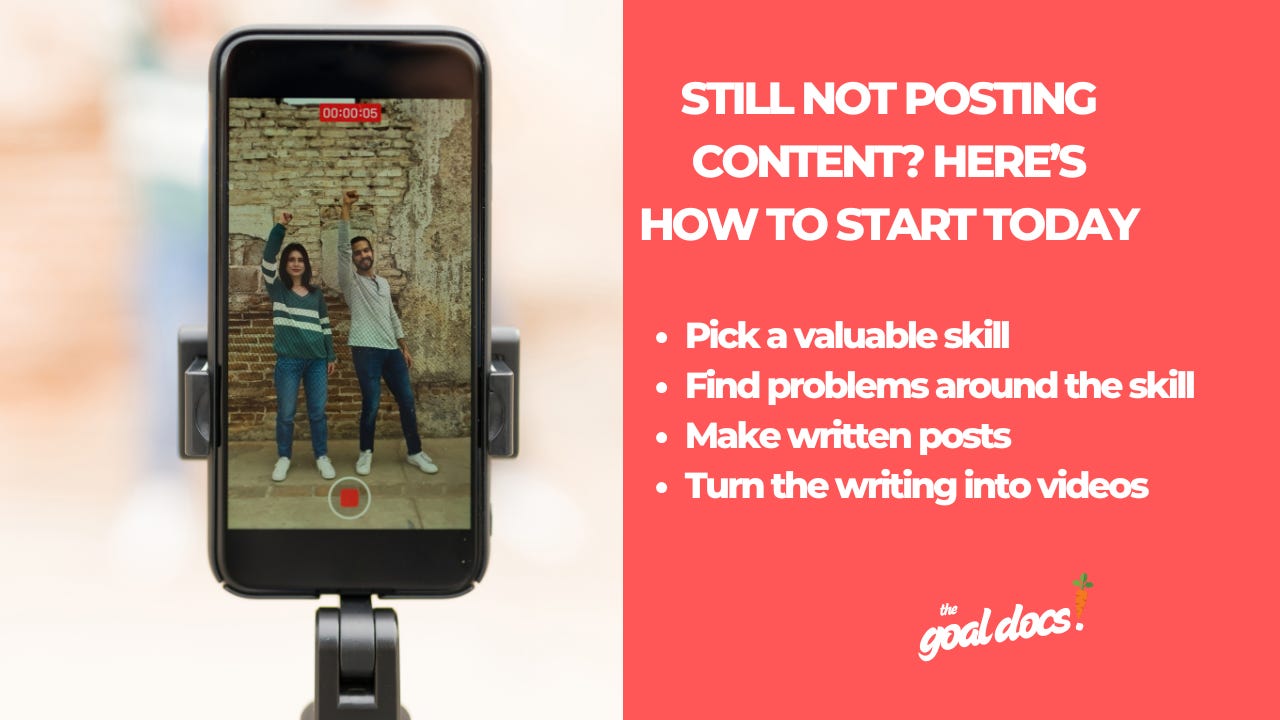
You work full time and invest a little automatically, but the return from stocks is not life changing unless you wait decades, so you feel stuck and want extra income streams without knowing where to start. The solution is to build an audience by posting about what you are already good at, without trying to become an influencer, just solving real problems people already have and letting your posts work for you on a schedule. This gives you a repeatable system to turn one skill into months of blog posts, short form content, and even videos so you stop guessing and start stacking attention, which is the currency that leads to sales.
Lesson 1: A job alone won’t get you there
Let us do quick math.
Say you get a $15,000 raise and invest every dollar of it for five years at an 8% return. You end up with about $88,000. That is real money. But if your monthly expenses are $3,500, that $88,000 lasts only 25 months. Then it’s gone.
A job even a good one will not produce a life changing return fast enough for most people. You need another currency. That currency is other people’s attention. When you get attention you get an audience. When you have an audience you can sell things. You don't need a million followers. You just need a few hundred people who trust what you say about one skill.
Lesson 2: Attention works like giving a gift
Forget fancy terms. Here is how attention works in real life.
You give something valuable such as a tip, a story, or an answer to a question.
People notice it. They click, read, or watch.
Then they feel something. They might feel smarter, relieved, entertained, or even annoyed.
Then they show appreciation with a like, a comment, or a share. That appreciation makes you want to give more.
You only need to master one step. Master giving value on a consistent basis. The rest happens naturally.
Lesson 3: Identify your one skill even if it sounds goofy

Most people freeze because they think they have nothing interesting to post. That is false.
Step 1 – Make a list of everything you are good at.
Use words ending in “ing”: cooking, talking, selling, taking pictures, fixing things, telling stories, or even moonwalking. Do not filter. Write it all down.
Step 2 – Rank each skill on this scale.
Prospect means you understand it but have not proven it.
Role player means people have paid you for results.
Starter means you have led a team around this skill.
All-star means you can teach it and others have learned.
Superstar means you have built a product or service around it that pays you.
Step 3 – Pick the skill that shows up most when you ask these questions.
Which two could someone pay you for right now?
Which can you do for hours without getting tired?
Which does not feel like work?
Which gives you energy?
That's your focus. If you can't answer the “paid for” question, search that skill on LinkedIn Jobs. If no job titles appear, pick another skill.
Lesson 4: Find what people are already asking on Reddit
You don't have to guess what to write about. Go where people are already screaming for answers.
Open an AI and ask: “What do people on Reddit most ask about or have trouble with around (your skill)?”
Take the top question. Then go to Reddit and search that exact question. You can find real posts from real people describing their pain.
Screenshot the pains you see, or write them down. Now you have a list of topics. Each topic is a blog post waiting to happen.
Lesson 5: Record your answer instead of writing it from scratch
Now it's time to make the first draft of your post. If your thinking “but I suck at writing” right now, don't worry. You don't need to know how to write. You just need to do a little talking.
Download Otter.ai. It is free.
Pick a topic from your Reddit list.
Hit record and speak your answer like you are explaining it to a friend. Don’t worry about perfect grammar or structure.
Export the transcript.
Then give the transcript to an AI with this prompt: “Turn my notes into a blog post. The title, each section header, and the first sentence of each paragraph should either state a helpful principle, ask a thought-provoking question, make readers laugh, or surprise them. Always put the solution first, then explain the problem second.”
After you get the result, edit it to sound like you. Fix any misunderstandings, and make your post match your actual tone.
Lesson 6: Schedule your posts so they publish automatically
Most people make content and publish it immediately. Then they have nothing for next week.
To get around this, you can set each blog post to publish one month from today. Then repeat the process until you have 12 posts scheduled, one per month for a year.
Afrer your blog, you can pull short tweet-sized sections from the text and schedule those as social posts too. Now you have consistency without daily work.
Lesson 7: Turn your best tweets into 60 second videos
Video gets more attention than text, but you do not need Hollywood equipment.
Pick one of your tweet-sized posts. Open CapCut or your phone’s camera and use vertical mode. Record yourself saying the post out loud. Keep it under 60 seconds. Edit lightly and add captions if you want. Post to TikTok or YouTube Shorts. Use the tweet as your caption. Then repeat.
Over time, your only goal is to make each video slightly better than the last.
Your one next step
Pick one skill.
Write down three problems people have with it.
Record a two minute answer on Otter.ai.
Turn that into one blog post.
Schedule it for next month.
Then do it again.
You do not need a million views. You need one audience that trusts you. That audience starts with your first scheduled post.